


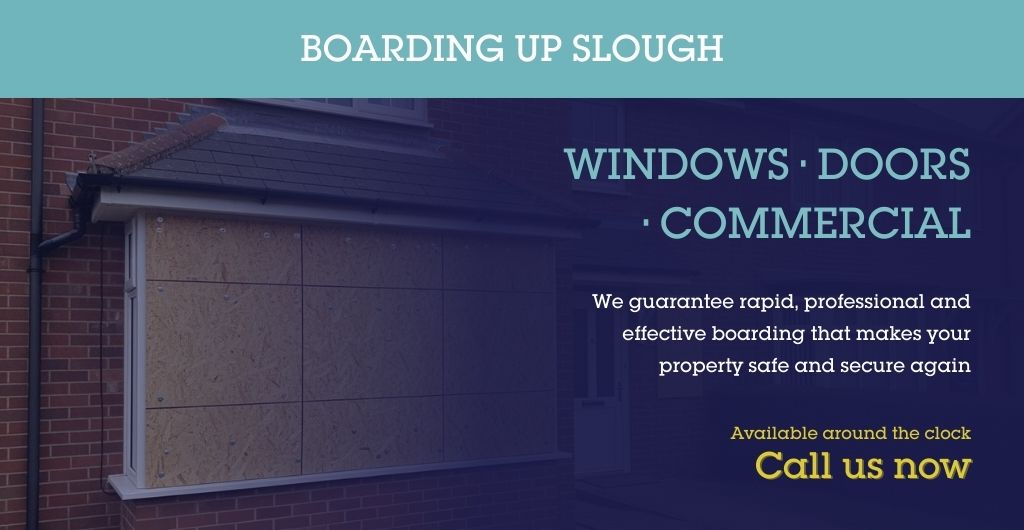
What is Boarding Up in Slough? A Practical Guide to Securing Your Property
Boarding up is the process of temporarily securing broken, missing, or vulnerable openings—most commonly windows, doors, shopfront glazing, or rooflights—using robust panels and specialist fixings. In Slough and the wider SL postcode area, boarding up is usually needed after a break-in, vandalism, storm damage, fire damage, or an accident that leaves your property exposed.
At Boarding Up Slough, we provide boarding up services in Slough that are designed to do three things quickly and safely: protect people from injury, reduce the chance of further damage or theft, and help you stay on the right side of insurer and landlord requirements. If you need urgent help, see our dedicated page for emergency boarding up.
When is boarding up needed?
People often think boarding up is only for smashed windows, but in practice we’re asked to secure properties across SL1–SL3 (Slough, Cippenham, Langley, Wexham, Britwell), and further out across SL0–SL9 for a range of situations.
Common call-outs include:
- Burglary or attempted break-in where frames are splintered or the lock area is damaged
(see boarding up after burglary) - Vandalism, including stones through windows and damage to shopfronts
(see vandalism repairs and boarding) - Storm damage, especially where wind has loosened panes or debris has struck glazing
(see storm damage boarding and make-safe) - Fire damage, where windows/doors have failed or the property has been left insecure after attendance
(see securing a property after fire damage) - Flood damage, when swollen frames won’t close or doors are misaligned
(see post-flood property securing) - Accidental impact, such as a vehicle strike near a forecourt or a cracked communal entrance panel
(see accident damage boarding)
Boarding up can also be a planned measure for empty buildings—particularly where a property is between tenants, going through probate, or awaiting sale. In those cases, it’s often part of a wider approach to vacant property security.
What does boarding up actually involve?
Boarding up isn’t just “putting a board over it”. Done properly, it’s a make-safe job that balances security, weather protection, and avoiding unnecessary damage to what’s left of the frame.
A typical boarding up job in Slough involves:
-
Assessing the opening and the surrounding frame
- We check whether the remaining glass is stable, whether there are sharp edges, and whether the frame can take fixings.
- If the frame is too damaged for non-destructive methods, we’ll explain the options before proceeding.
-
Measuring and choosing the right material
- For most domestic windows, we’ll typically use exterior-grade plywood (often 18mm) for strength and better weather resistance.
- For smaller or lower-risk openings, OSB (often 12mm) may be suitable, depending on location and exposure.
-
Fitting using appropriate fixing methods
- Where possible, we use anti-tamper fixings and methods that reduce the chance of boards being removed from outside—especially important if the property will be unattended.
- On some jobs, we’ll use internal bracing methods to avoid fixing through fragile or decorative surrounds.
-
Checking security and access
- We’ll confirm what access you need to keep (for example, a rear door for trades, or a safe entrance for residents).
- If a doorway can’t be safely used, we’ll discuss alternatives such as a temporary steel door.
-
Providing documentation
- Customers commonly need proof of what was done and when—particularly for landlords, managing agents and insurers.
- We can supply an itemised invoice and a work statement, and we routinely take time-stamped photos of the secured openings.
If you already know what needs boarding, you can jump to the relevant service: window boarding in Slough or door boarding in Slough.
What materials are used—and why?
The right board and the right fixings matter. Poorly fitted boarding can actually make things worse by letting water in, damaging frames, or creating an easy lever point for someone trying to gain entry.
Plywood vs OSB (the straightforward difference)
- Exterior-grade plywood
Strong, stable, and generally better in wet conditions. Often preferred for street-facing ground floor windows and commercial frontages where strength matters. - OSB (Oriented Strand Board)
Cost-effective and robust for many temporary applications, particularly where the opening is smaller or less exposed. It can be appropriate when the priority is a quick, secure cover while glass replacement is arranged.
We’ll recommend the most suitable option based on:
- exposure to weather (open aspect vs sheltered)
- whether the property is occupied
- height/access constraints (upper floors, rear extensions, alley access)
- the condition of the existing frame and surrounding brickwork
For commercial sites, the opening size can be a deciding factor. Larger spans (common with retail glazing) often require a stronger approach and careful fixing, which is why shopfront boarding in Slough is handled slightly differently from domestic window work.
Is boarding up just for emergencies?
No. We do plenty of emergency work, but boarding up is also used as planned, preventative security—particularly around void properties.
You might arrange boarding up if:
- a shop unit is between tenants near a busy parade
- a property is awaiting refurbishment
- an office has been vacated and you want to reduce risk until marketing/viewings restart
- a building has repeated issues with attempted entry
In those situations, you may be better served by more robust medium-term solutions such as security screens or a steel door, rather than standard timber boarding. If you’re managing a building that will be empty for a while, see boarding up for vacant property.
Boarding up for homes vs businesses (what changes?)
Slough has a real mix: Victorian terraces around central streets, 1930s semis in residential pockets, and dense commercial areas near trading estates and retail parades. The approach changes depending on how the building is used.
Residential properties
For houses, flats and maisonettes, the priorities are usually:
- keeping residents safe (no exposed shards, no unstable frames)
- securing at ground level and accessible roofs/extensions
- keeping access practical (you may still need to come and go)
If you’re a homeowner or tenant, our residential boarding up service explains what to expect.
Commercial premises
For shops, offices, and industrial units, we often need to consider:
- larger glazed areas and stronger fixing requirements
- out-of-hours access and keyholding arrangements
- site rules, loading bays, shutters, and shared access points
If you’re securing business premises, see commercial boarding up in Slough.
Temporary steel doors and security screens: alternatives to timber boarding
Timber boarding is a strong short-term option, but it isn’t always the best answer—especially if a doorway has been forced or a building will be empty for weeks.
Temporary steel doors
A temporary steel door is commonly used when:
- a door is smashed or the lock/hinge area has failed
- you need a secure, lockable entry for trades
- the property is vacant and you want a more durable solution than repeated re-boarding
Steel doors are particularly useful for repeated access on renovations and for buildings with a history of tampering.
Steel security screens
Security screens are a good fit when:
- you want longer-term protection without sealing the property up completely
- ventilation and light are important (depending on design)
- the risk of repeated attacks is higher (for example, isolated rear elevations)
We’ll be honest about what’s appropriate. If the most sensible route is a short-term board while a glazier is booked, we’ll say so.
What to do before we arrive (and what not to do)
If your property has been damaged, it’s normal to feel rushed—but a few calm steps can make the process smoother.
If it’s safe:
- keep people away from broken glass and unstable frames
- take a couple of photos for your own records (before anything is moved)
- if it’s a crime, keep your police reference number handy
- contact your insurer early if you plan to claim
Avoid:
- trying to clear glass from high windows without proper PPE
- leaning loose boards against openings (they can fall and cause injury)
- forcing damaged doors shut if the frame is twisted—this can make later repairs harder
For urgent situations, go straight to 24 hour emergency boarding up in Slough.
Insurance and documentation: what you’ll typically need
We’re not loss adjusters and can’t advise on policy wording, but we can help with the practical parts insurers usually ask for.
Typically useful documentation includes:
- description of the damage and why the building was left insecure
- what make-safe works were carried out (materials, fixings, locations)
- time-stamped photos (before/after where possible)
- an itemised invoice and work statement for your claim file
If you’re dealing with a claim, see our guidance on insurance claims for boarding up. If you want transparency on what affects the price, our boarding up pricing information explains the main cost factors (without throwing out unrealistic fixed figures).
How long does boarding up take?
The time on site depends on the number of openings, access, and the condition of frames. A single domestic window is very different from a multi-panel shopfront or a door that needs a temporary steel door solution.
We don’t promise fixed arrival times—traffic around Slough can be unpredictable, and emergency jobs are prioritised. What we do promise is clear communication and a practical plan when you call.
FAQs about boarding up in Slough
Is boarding up covered by insurance in Slough?
Often it can be, especially where boarding up is needed to make the property safe after a covered event (like a break-in or storm damage). Policies vary, so it’s best to check your wording. We can provide the photos and paperwork typically needed—see insurance claims for boarding up.
Can you board up a shopfront without causing more damage?
In many cases, yes. The fixing method depends on what’s left of the frame and surrounding structure. Where a non-destructive approach isn’t possible, we’ll explain why and talk you through options before proceeding. More detail is on shopfront boarding in Slough.
What’s the difference between door boarding and a temporary steel door?
Door boarding closes off an opening; a temporary steel door provides a secure, lockable entry. If you need ongoing access for trades or inspections, a steel door is often the better option. See door boarding in Slough.
Do you secure roofs and rooflights as well?
Yes—leaks and exposed roof openings can cause rapid internal damage, especially in bad weather. Roof work depends on safe access and conditions on the day. See roof boarding in Slough.
I’m a landlord/managing agent—can you help with paperwork for tenants or insurers?
Yes. We regularly work with landlords and facilities teams and can provide itemised invoices, work statements and supporting photos for your records. If the property will be empty for a while, vacant property boarding up may be relevant.
Ready to secure your property?
Whether you need a quick make-safe after damage or a planned solution for a vacant building, we’ll talk you through the options and recommend what fits the situation.
Ready to get started? Call 01753 379 919 or email us for a free, no-obligation quote.
